A 46-year-old man with chronic kidney disease presented with a 2-year history of painless shortening and rounding of the fingertips. Ten years earlier, he had received a diagnosis of chronic kidney disease due to obstructive nephropathy from nephrolithiasis. Since then, he had been intermittently lost to follow-up. On physical examination, all the fingertips were short, broad, and bulbous, with a pseudoclubbing appearance. The toes had similar but less severe changes. What do the findings on the exam and imaging represent?
一名46岁男性,患有慢性肾病,因无痛性手指变短、末端变圆已有2年。10年前,他被诊断为由肾结石所致梗阻性肾病引起的慢性肾病。此后,他间断性失访,未规律随访。体格检查显示,所有手指均短、宽且呈杵状,外观类似假性杵状指。足趾也有类似改变,但程度较轻。体格检查及影像学所显示的这些表现代表什么?
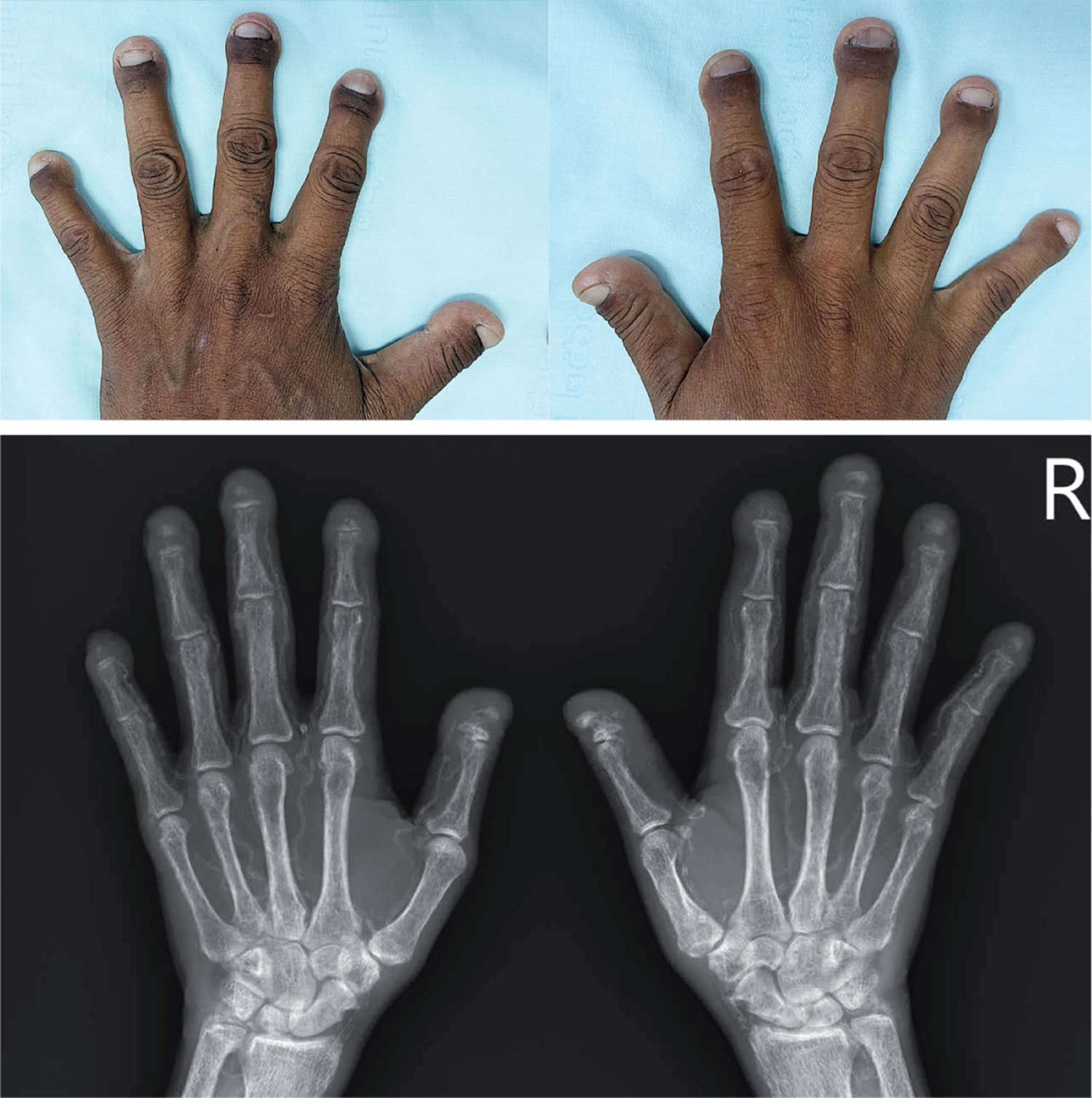
A. Acro-osteolysis肢端骨溶解
B. Arthritis mutilans残毁性关节炎
C. Clubbing杵状指
D. Hypertrophic osteoarthropathy肥大性骨关节病
E. Sclerodactyly硬皮指
答案解析:
双手X线片显示,所有指骨末端的指骨粗隆均发生吸收,这一表现符合肢端骨溶解(acro-osteolysis)。
肢端骨溶解可见于多种情况,包括系统性硬化症、雷诺现象、氯乙烯暴露以及热损伤。本例中,终末期肾病背景下的肾性骨营养不良和三发性甲状旁腺功能亢进被确定为其潜在病因。
正确答案:A
原创文章(本站视频密码:66668888),作者:xujunzju,如若转载,请注明出处:https://zyicu.cn/?p=22225
 微信扫一扫
微信扫一扫  支付宝扫一扫