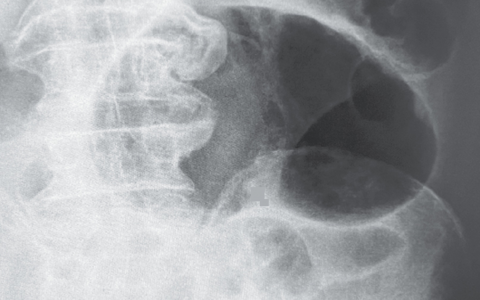
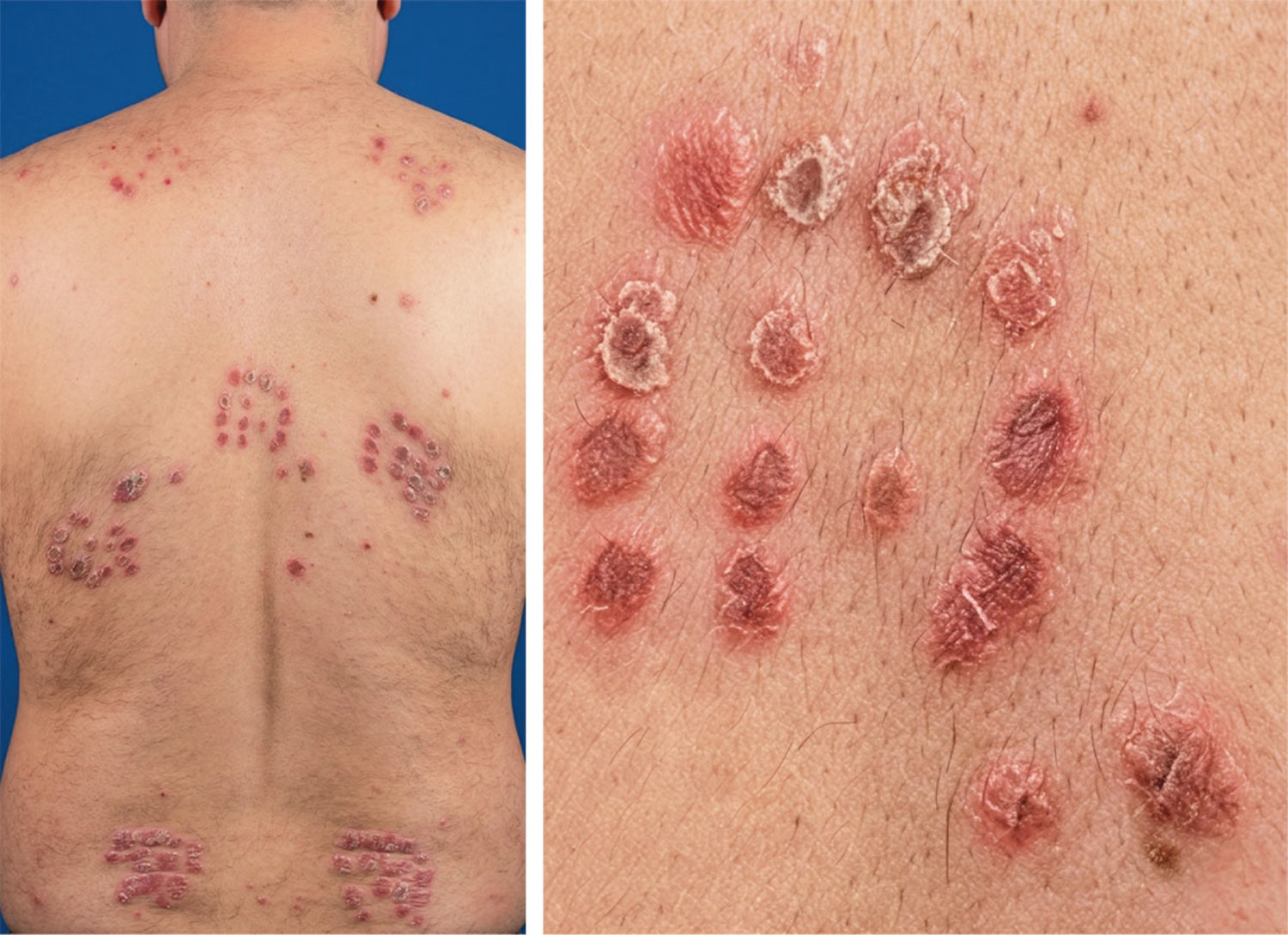
A 35-year-old man with a history of moderate-to-severe plaque psoriasis presented to the dermatology clinic with new skin lesions. His psoriasis had been in remission for the past 18 months while on risankizumab. Two weeks before presentation, the patient had undergone his first ever session of wet cupping therapy to treat low back pain. During the treatment, clusters of small incisions had been made at different sites across his back, after which glass cups had been applied with negative pressure to draw out small amounts of blood. What is the most likely diagnosis?
一名 35 岁男性,既往有中重度斑块型银屑病(plaque psoriasis)病史,因新发皮肤损害就诊于皮肤科门诊。患者在接受利桑奇珠单抗(risankizumab)治疗期间,银屑病已缓解 18 个月。就诊前 2 周,患者因腰痛首次接受湿拔罐治疗(wet cupping therapy)。治疗过程中,医生先在背部多个部位成簇地做了若干小切口,随后在这些部位放置玻璃罐,通过负压吸引抽出少量血液。最可能的诊断是什么?
A. Impetigo脓疱病
B. Isotopic response同位反应
C. Koebner phenomenon (isomorphic response)同形反应
D. Pathergy路径反应
E. Relapse of psoriasis银屑病复发
答案解析:
中文翻译:
患者最终被诊断为湿拔罐治疗诱发的 Koebner 现象。Koebner 现象(Koebner phenomenon),又称同形反应(isomorphic response),是指由于皮肤外伤所致,在原本未受累的皮肤部位出现既往已有皮肤病的新皮损。这种现象可见于多种皮肤病,包括银屑病、白癜风和扁平苔藓等。值得注意的是,即使患者原有皮肤病控制良好,甚至处于缓解状态,仍然可能发生 Koebner 现象。
正确答案:C
原创文章(本站视频密码:66668888),作者:xujunzju,如若转载,请注明出处:https://zyicu.cn/?p=22140
 微信扫一扫
微信扫一扫  支付宝扫一扫