Abstract
Objectives: Hyperinflammatory and hypoinflammatory molecular subphenotypes in sepsis and acute respiratory distress syndrome have divergent mortality and treatment responses in secondary analyses of randomized controlled trials. However, the prevalence of immunocompromise is low in these populations, and how preexisting immunocompromise contributes to subphenotypes is unknown. We studied two observational sepsis cohorts to test associations between immunocompromise and the hyperinflammatory subphenotype and to assess whether the prognostic relevance of molecular subphenotypes is generalizable to immunocompromised populations.
目的: 在随机对照试验的二次分析中,脓毒症和急性呼吸窘迫综合征(ARDS)中的高炎症和低炎症分子亚型在死亡率和治疗反应方面存在显著差异。然而,在这些研究人群中,免疫功能受损(immunocompromise)的患病率较低,且既有的免疫功能受损如何影响亚型分类尚不清楚。我们研究了两个观察性脓毒症队列,旨在检验免疫功能受损与高炎症亚型之间的关联,并评估分子亚型的预后相关性是否可推广至免疫功能受损人群。
Design: Observational cohort study.
设计: 观察性队列研究。
Setting: Prospective data from two ICU cohorts in the United States.
场所: 来自美国两个ICU队列的前瞻性数据。
Patients: We included 1826 patients from two combined sepsis cohorts.
患者: 我们纳入了来自两个合并脓毒症队列的1826名患者。
Interventions: None.
干预: 无。
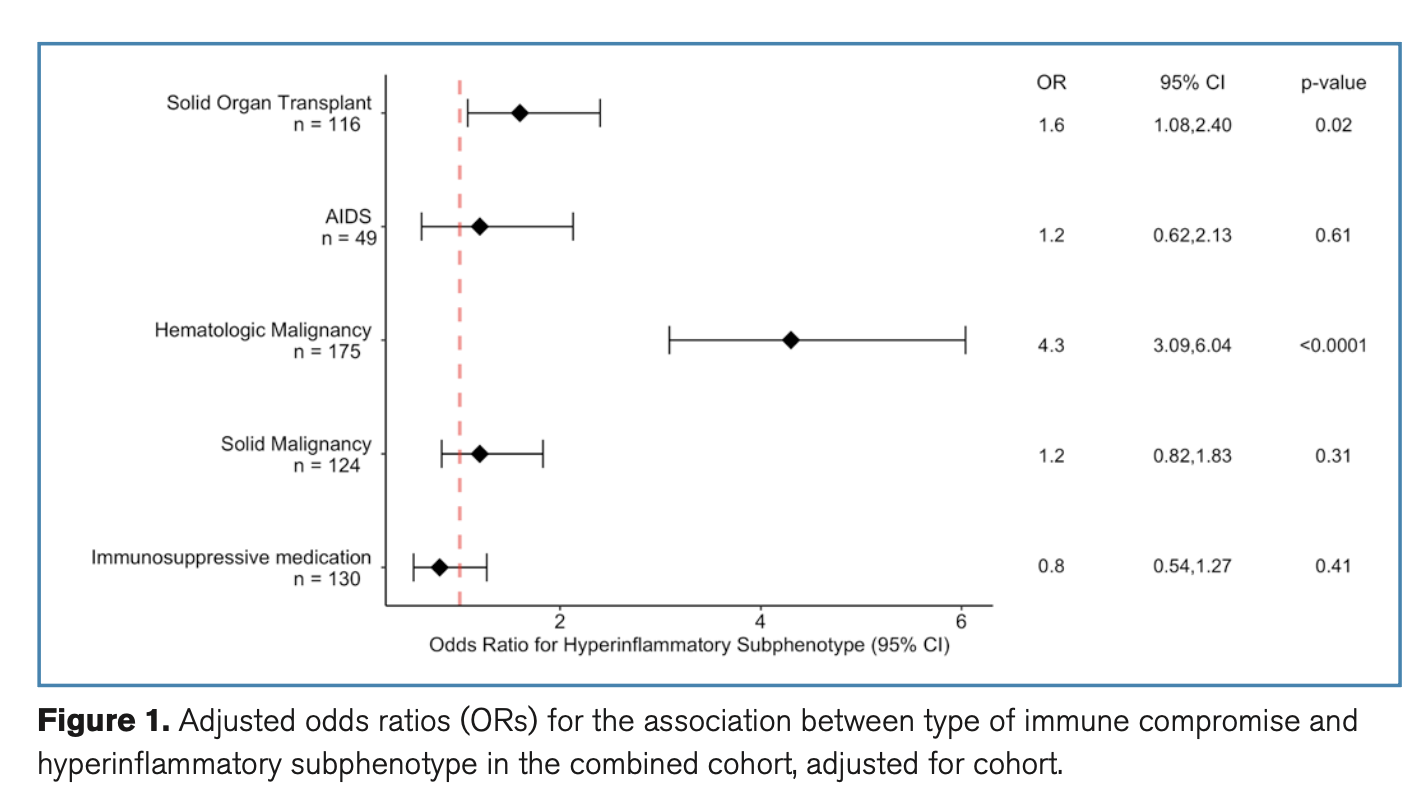
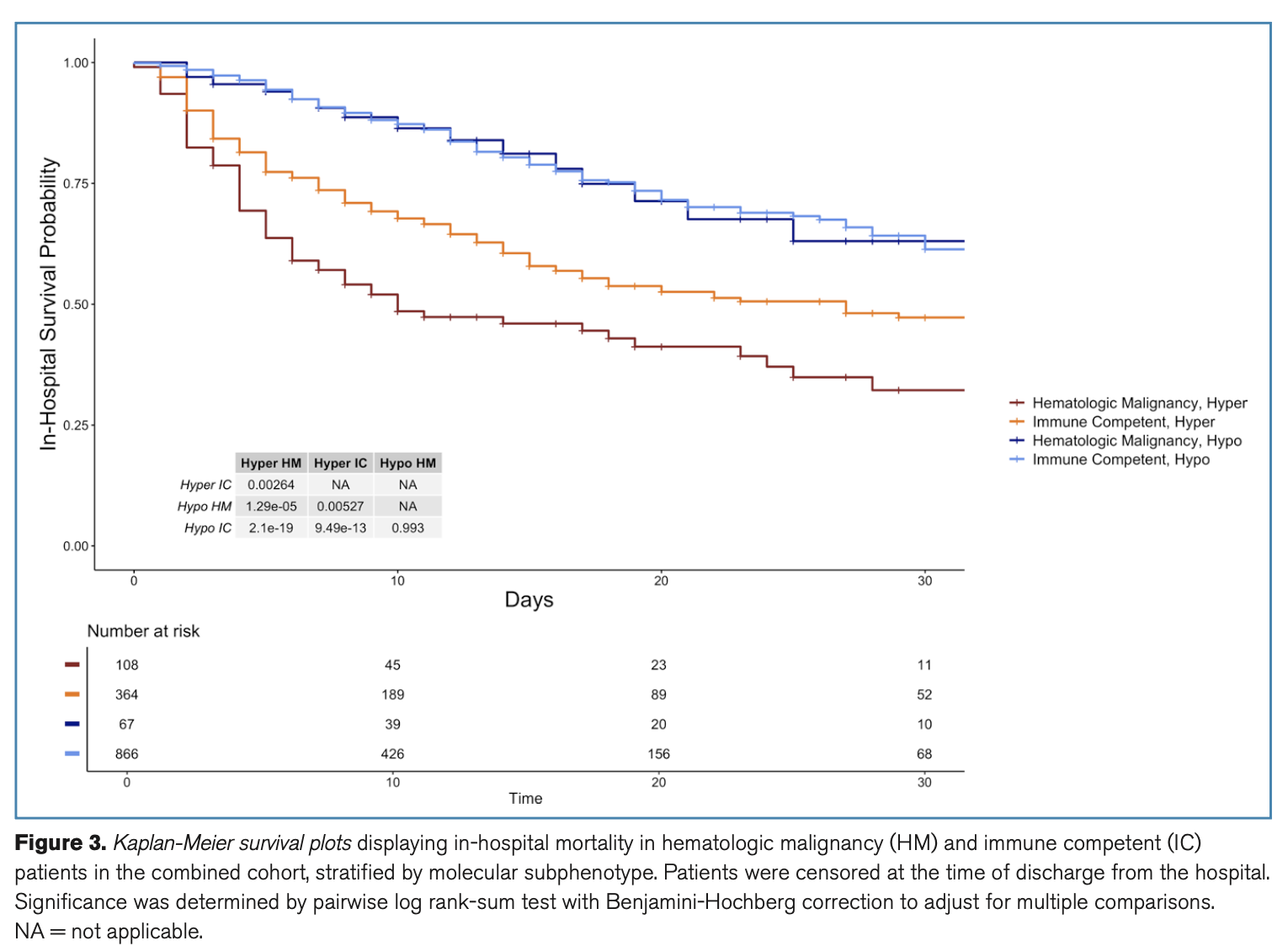
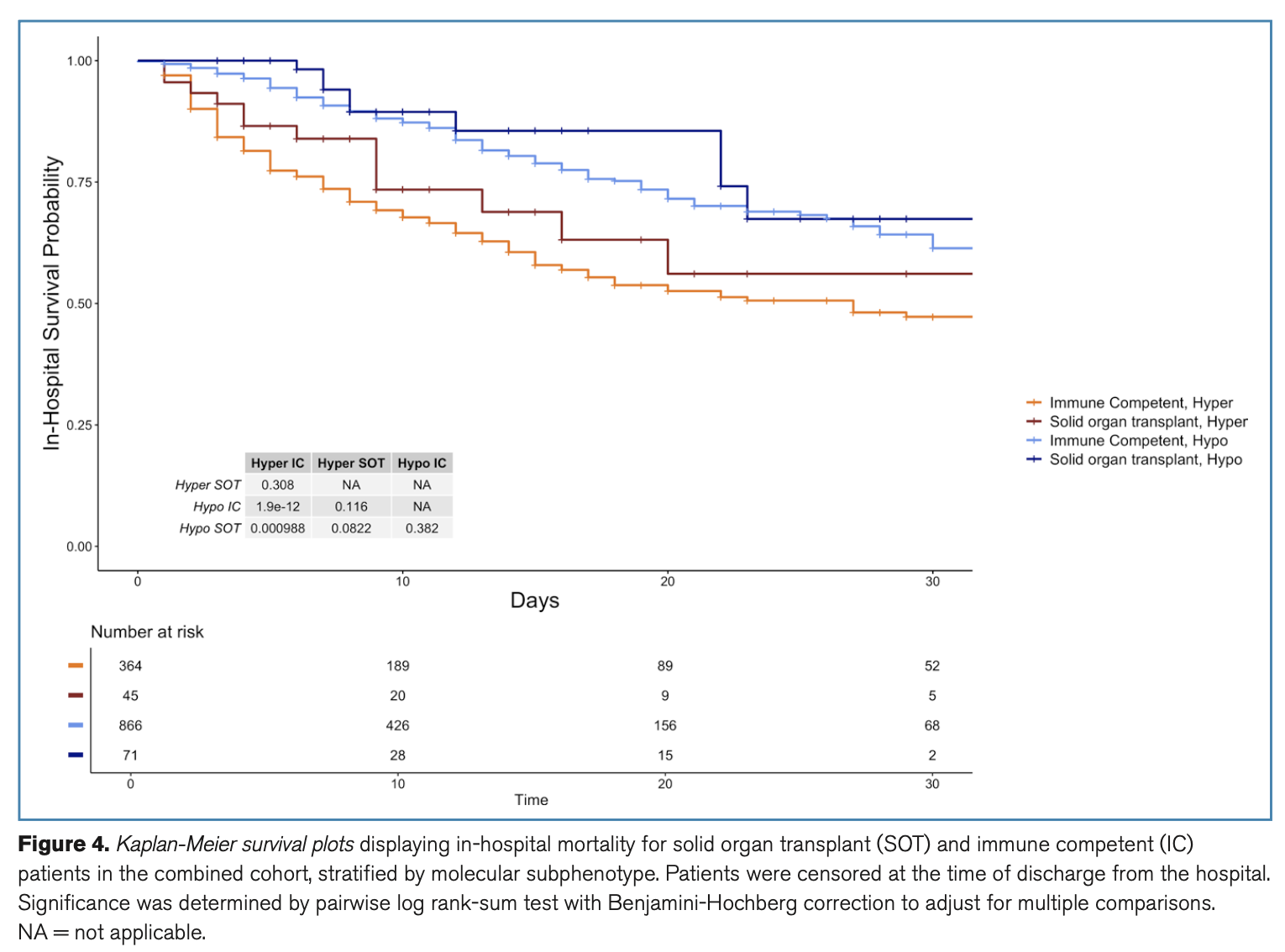
Measurements and main results: We defined immunocompromise as a history of solid organ transplant, AIDS, hematologic malignancy, solid malignancy on chemotherapy, or immunosuppressive medication use. Subphenotype was previously assigned using latent class analysis. We used logistic regression to investigate associations between type of immunocompromise and hyperinflammatory subphenotype. Models were repeated with individual covariates known or hypothesized to be associated with the hyperinflammatory subphenotype. Kaplan-Meier survival plots were used to assess mortality differences by subphenotype. Hematologic malignancy was strongly associated with the hyperinflammatory subphenotype (odds ratio [OR], 4.3; p < 0.0001), an association that persisted after adjustment for identified pathogen, presence of bacteremia, or illness severity. History of solid organ transplantation was also associated with the hyperinflammatory subphenotype (OR, 1.6; p = 0.02) but was no longer significant after accounting for bacteremia. Hyperinflammatory classification was associated with a decreased likelihood of survival in hematologic malignancy, but not in organ transplant or solid malignancy populations.
测量指标与主要结果: 我们将免疫功能受损定义为有实体器官移植史、艾滋病(AIDS)、血液系统恶性肿瘤、正在接受化疗的实体瘤或使用免疫抑制药物。亚型分类此前已通过潜类别分析(latent class analysis)完成。我们使用逻辑回归探讨免疫功能受损类型与高炎症亚型之间的关联。模型重复分析了已知或假设与高炎症亚型相关的单个协变量。采用Kaplan-Meier生存曲线评估不同亚型的死亡率差异。血液系统恶性肿瘤与高炎症亚型强相关(比值比 [OR], 4.3; p < 0.0001),且在调整了确定的病原体、是否存在菌血症或疾病严重程度后,该关联仍然存在。实体器官移植史也与高炎症亚型相关(OR, 1.6; p = 0.02),但在考虑菌血症因素后不再显著。高炎症分类与血液系统恶性肿瘤患者生存可能性降低相关,但在器官移植或实体瘤人群中并非如此。
Conclusions: Preexisting immune status is associated with subphenotype assignment and may influence its prognostic utility.
结论: 既有的免疫状态与亚型分型相关,并可能影响其预后效用。
原创文章(本站视频密码:66668888),作者:xujunzju,如若转载,请注明出处:https://zyicu.cn/?p=21974
 微信扫一扫
微信扫一扫  支付宝扫一扫